




The Complete Guide to Solar Rooftop Safety Systems in 2026: Why Every Solar Project Needs Safety Lines, Walkways, Handrails & Skylight Protection
Date: 04-07-2026 | Author: Sugatu
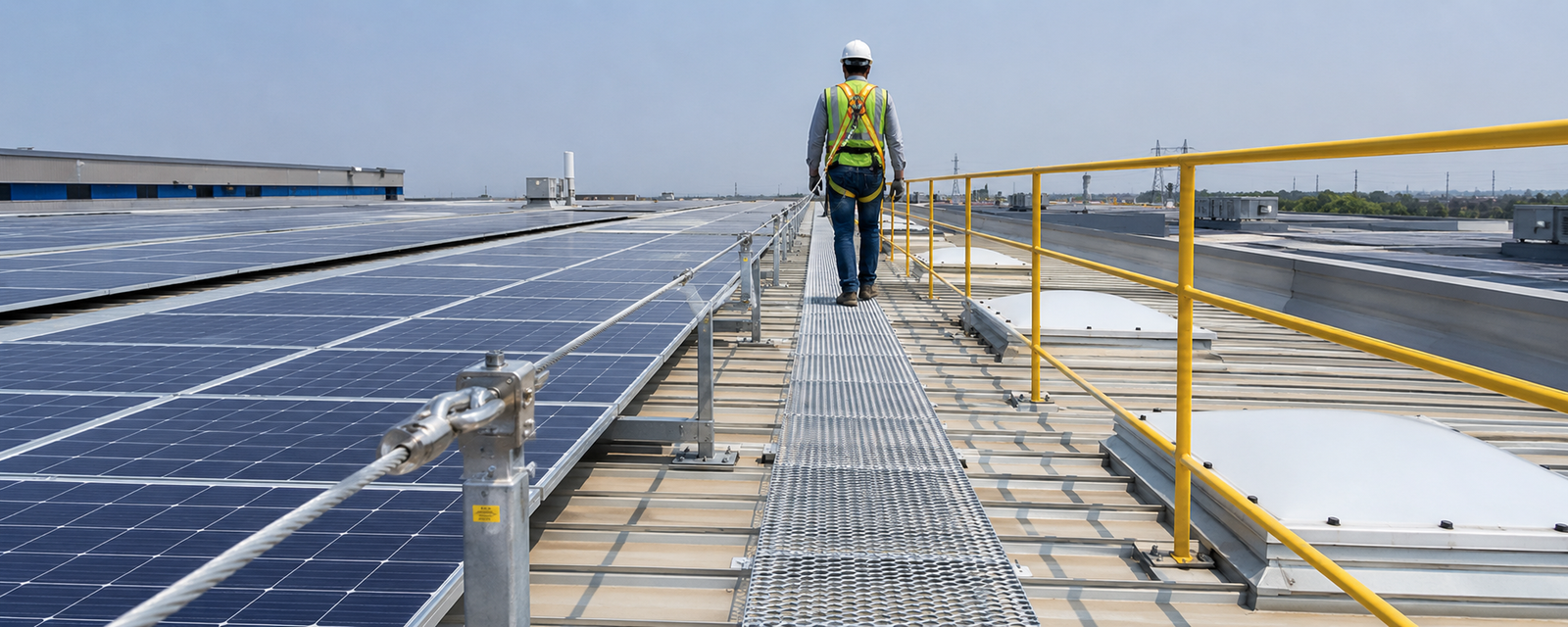
The Complete Guide to Solar Rooftop Safety Systems in 2026
India's rooftop solar industry is witnessing remarkable growth as businesses, industries, warehouses, educational institutions, hospitals, and commercial facilities continue to invest in renewable energy. While significant attention is given to solar panels, inverters, and mounting structures, one critical aspect is often overlooked—rooftop safety.
A rooftop solar installation is not a one-time project. Throughout its operational life, which typically exceeds 25 years, technicians regularly access the roof for cleaning, inspections, preventive maintenance, repairs, and performance optimization. Every visit exposes maintenance personnel to potential hazards, particularly when working at heights or around fragile roofing elements.
A complete Solar Rooftop Safety System ensures that maintenance teams can perform their work safely and efficiently without compromising productivity or worker wellbeing. By integrating Solar Safety Lines, Solar Walkways, Handrails, and Skylight Protection Systems, project owners create a secure environment that supports both operational efficiency and long-term asset protection.
As solar adoption accelerates across India, rooftop safety is no longer an optional investment—it has become an essential component of every professionally engineered solar installation.
Why Rooftop Safety Is More Important Than Ever
The demand for rooftop solar systems continues to rise across industrial and commercial sectors, bringing with it an increased need for regular maintenance. Solar modules require periodic cleaning to maintain efficiency, electrical systems need routine inspections, and components occasionally require replacement or servicing.
Without proper safety infrastructure, technicians are forced to walk directly on roofing sheets, navigate around solar modules, and work near roof edges or fragile skylights. These situations significantly increase the likelihood of slips, falls, equipment damage, and workplace accidents.
A properly designed Rooftop Safety System minimizes these risks while improving maintenance efficiency. Safe access routes allow technicians to move confidently around the installation, reducing downtime and protecting both personnel and equipment. Investing in rooftop safety not only safeguards lives but also helps organizations reduce operational risks and maintain uninterrupted solar performance throughout the life of the project.
Understanding a Complete Solar Rooftop Safety System
A Solar Rooftop Safety System is a combination of engineered safety solutions designed to protect workers while allowing easy access to rooftop solar installations. Rather than relying on a single product, modern projects combine multiple systems that work together to provide comprehensive protection.
Each component serves a specific purpose. Solar Safety Lines protect workers from falls while working at height. Solar Walkways create dedicated access paths that prevent roof damage and improve movement across the installation. Handrail Systems secure roof edges where fall risks are highest, while Skylight Protection prevents accidental falls through fragile skylight panels.
Together, these systems create a safer and more organized working environment, enabling maintenance activities to be carried out efficiently without compromising safety.
Solar Safety Lines: Protecting Workers at Height
One of the most important elements of any rooftop safety solution is the Solar Safety Line. This permanent fall protection system allows maintenance personnel to remain securely connected while moving across rooftops.
Unlike temporary safety arrangements, permanent safety lines provide continuous protection throughout the operational life of the solar plant. Workers can safely inspect modules, clean panels, service electrical components, and perform maintenance while remaining connected to a reliable anchorage system.
High-quality Solar Safety Line Systems are manufactured using corrosion-resistant materials capable of withstanding harsh environmental conditions including rain, humidity, UV exposure, and industrial pollution. Their durability makes them suitable for factories, warehouses, commercial buildings, logistics centers, and utility-scale rooftop solar installations where long-term reliability is essential.
By reducing fall risks and improving worker confidence, Solar Safety Lines have become a standard safety feature in professionally designed rooftop solar projects.
Solar Walkways: Creating Safe Access Across Rooftops
Maintaining a solar installation requires technicians to move safely between rows of solar panels, electrical equipment, and maintenance areas. Walking directly on roofing sheets not only increases the risk of slipping but can also damage roofing materials and compromise structural integrity.
A Solar Walkway provides a designated path that enables safe movement across the rooftop while protecting both workers and the building itself.
Engineered walkways distribute weight evenly and offer anti-slip surfaces that remain effective even during challenging weather conditions. They improve accessibility to equipment, reduce maintenance time, and minimize accidental damage to roofing sheets and solar modules.
As industrial rooftops become increasingly populated with solar infrastructure, Solar Walkways are now considered an essential component of responsible project design rather than an optional accessory.
Handrail Systems: Protecting Rooftop Edges
Roof edges remain one of the most hazardous areas during maintenance operations. Technicians working near the perimeter face a significantly higher risk of falls, particularly when carrying equipment or performing inspections.
A professionally engineered Solar Handrail System creates a permanent protective barrier that allows personnel to work confidently near roof edges without compromising safety.
Unlike temporary guardrails, permanent handrail systems provide continuous protection while requiring minimal maintenance. Manufactured from corrosion-resistant galvanized steel or aluminium, these systems deliver exceptional durability even in harsh industrial environments.
Installing handrails not only improves worker safety but also demonstrates a proactive commitment to workplace safety standards, making them an increasingly common requirement for commercial and industrial solar installations.
Skylight Protection: An Often Overlooked Safety Requirement
Industrial buildings frequently incorporate skylights to maximize natural lighting within production facilities and warehouses. Although these skylights appear structurally sound, they are generally not designed to support human weight.
During maintenance, technicians focused on solar equipment may accidentally step onto a skylight, resulting in severe accidents.
A Skylight Protection System eliminates this risk by installing robust protective barriers over fragile skylights without reducing natural light transmission.
These systems significantly improve rooftop safety by preventing accidental falls while preserving the functionality of the building. As rooftop solar installations continue to expand across industrial facilities, skylight protection has become an increasingly important component of comprehensive rooftop safety planning.
Why Complete Rooftop Safety Systems Deliver Long-Term Value
Many project owners initially focus on installation costs while overlooking the long-term value provided by rooftop safety infrastructure. However, comprehensive safety systems offer benefits that extend far beyond accident prevention.
Safe access routes enable faster maintenance, allowing technicians to complete inspections more efficiently and reducing operational downtime. Protected rooftops experience less accidental damage, lowering repair costs over the life of the building.
Reliable safety infrastructure also contributes to improved workforce confidence, helping maintenance personnel perform their duties more effectively while reducing workplace stress.
Perhaps most importantly, investing in rooftop safety demonstrates a long-term commitment to responsible project management. As organizations place increasing emphasis on workplace safety and operational excellence, comprehensive rooftop safety systems are becoming a defining feature of professionally managed solar installations.
Choosing the Right Rooftop Safety Solution
Selecting rooftop safety products requires careful evaluation of material quality, engineering expertise, durability, and long-term performance. Safety systems must be capable of withstanding years of environmental exposure while maintaining their structural integrity and protective capabilities.
Manufacturers should provide products engineered specifically for rooftop solar applications using corrosion-resistant materials, precision manufacturing processes, and proven installation methods.
Equally important is technical support. Every rooftop presents unique structural characteristics, making professional engineering guidance essential for selecting the most appropriate safety solution.
Working with an experienced manufacturer ensures that rooftop safety systems integrate seamlessly with existing solar infrastructure while delivering dependable performance throughout the life of the project.
Why Sugatu Is a Trusted Partner for Rooftop Safety Solutions
Sugatu specializes in delivering high-quality rooftop safety solutions designed specifically for commercial, industrial, and utility-scale solar installations. Our product portfolio includes Solar Safety Lines, Solar Walkways, Handrail Systems, Skylight Protection, Solar Cable Tray Systems, Mini Rail Mounting Systems, Solar Carports, and complete solar mounting solutions engineered to meet the evolving needs of India's renewable energy sector.
Every solution is developed with a focus on structural reliability, corrosion resistance, precision manufacturing, and long-term durability. By combining engineering expertise with premium materials, Sugatu helps EPC contractors, project developers, and industrial clients create safer, more efficient rooftop solar installations.
Whether your project involves a factory rooftop, warehouse, commercial facility, or institutional building, our solutions are designed to support safe maintenance, improve operational efficiency, and protect valuable solar assets for decades.
Conclusion
The success of a rooftop solar project depends not only on efficient power generation but also on the safety of the people responsible for maintaining it. As India's solar industry continues to expand, investing in Solar Rooftop Safety Systems has become an essential part of responsible project planning.
Integrating Solar Safety Lines, Solar Walkways, Handrail Systems, and Skylight Protection creates a comprehensive safety ecosystem that reduces workplace risks, improves maintenance efficiency, and protects long-term investments.
Choosing a trusted partner for rooftop safety solutions ensures that every maintenance activity can be performed with confidence while supporting the reliability and longevity of the entire solar installation.
Contact Sugatu Today
Website: www.sugatu.in
Email: sales@sugatu.in
Phone: +91 91526 62110
Build Safer Rooftop Solar Projects with Sugatu's Complete Solar Safety Solutions.
