




Top 10 Components Required for a Successful Solar Power Plant in India
Date: 30-05-2026 | Author: Sugatu
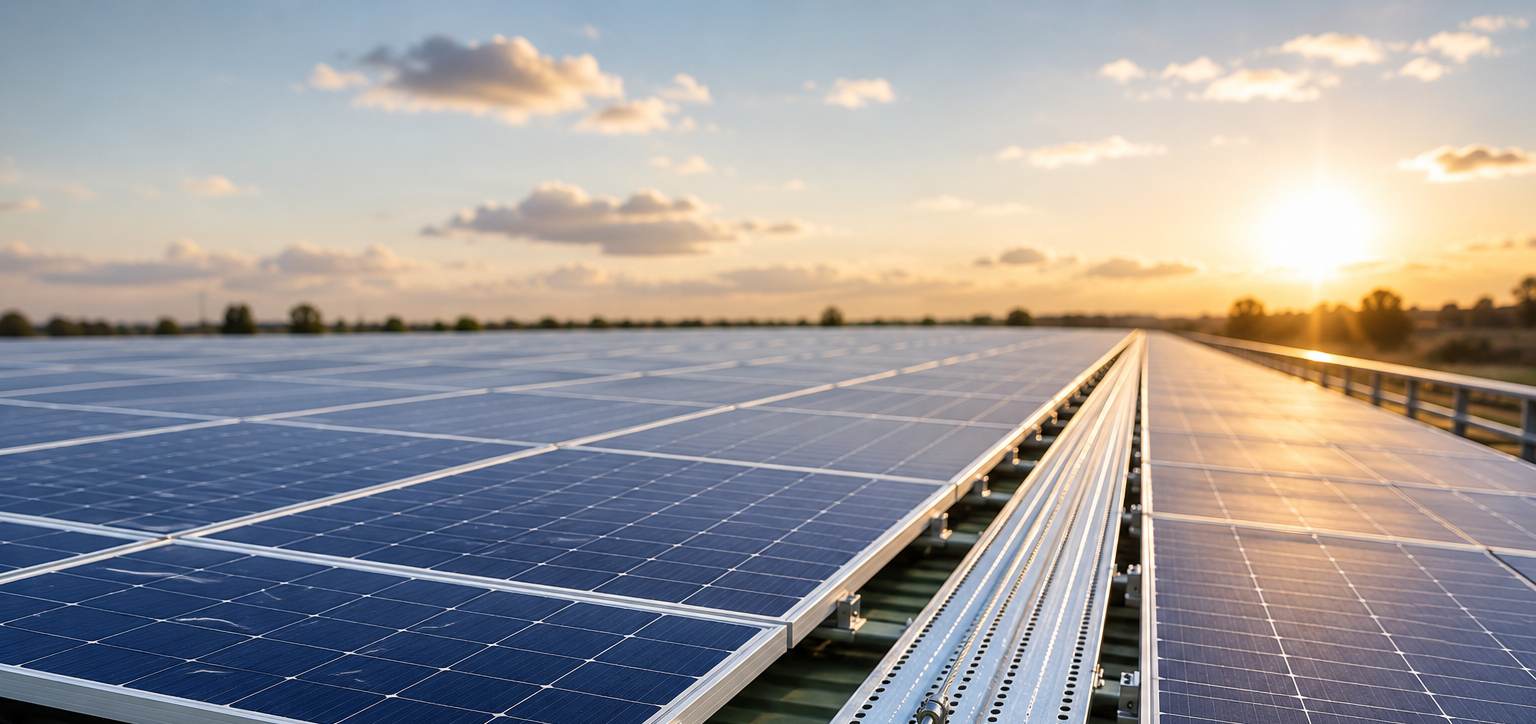
The growth of renewable energy infrastructure in India has accelerated the development of rooftop solar systems, industrial solar projects, and utility-scale solar power plants. While solar modules are often considered the most important part of a solar installation, the reality is that a successful solar power plant depends on a complete ecosystem of carefully selected solar power plant components.
From solar mounting structures and solar panel mounting systems to solar safety lines, solar walkways, solar handrails, and solar cleaning robots, every component contributes to the performance, durability, safety, and profitability of a solar project. Whether you are an EPC contractor, solar developer, industrial facility owner, or renewable energy investor, understanding the essential components of a solar power plant is critical for long-term success.
1. Solar Modules – The Core of Energy Generation
Solar modules are the primary energy-generating component of every solar power plant. Modern projects increasingly use high-efficiency mono PERC and bifacial solar modules to maximize energy yield and improve project returns. The quality, efficiency, and durability of solar panels directly impact the overall generation capacity of a solar power plant.
Selecting reliable solar modules helps ensure consistent performance throughout the project lifecycle while reducing operational risks and maintenance costs.
2. Solar Mounting Structures – The Backbone of Every Solar Project
A solar mounting structure serves as the foundation that supports solar modules and maintains their alignment throughout the life of the plant. High-quality solar mounting structures are designed to withstand harsh weather conditions, heavy wind loads, seismic activity, and environmental challenges.
Today, Galvalume solar structures and AZ150 Galvalume structures are becoming increasingly popular due to their superior corrosion resistance and long service life. These solar support structures provide enhanced durability and reduced maintenance compared to conventional alternatives.
For EPC companies and project developers, choosing the right solar mounting structure manufacturer is one of the most important decisions during project planning.
3. Ground Mounted Solar Structures for Utility-Scale Projects
Ground mounted solar structures are widely used in utility-scale solar plants and solar farms where large land areas are available. These structures are engineered to maximize land utilization while ensuring optimal solar panel orientation for maximum energy generation.
A well-designed ground mounted solar structure improves installation efficiency, minimizes maintenance challenges, and provides long-term structural stability. Ground mounted solar systems continue to dominate large-scale renewable energy infrastructure projects across India due to their scalability and performance advantages.
4. Solar Carport Structures – Generating Power from Parking Spaces
Solar carport structures offer a smart solution for commercial and industrial facilities looking to generate clean energy while utilizing existing parking areas. These structures provide vehicle shade and weather protection while simultaneously producing electricity.
Solar carport structures are increasingly being integrated with EV charging infrastructure, creating sustainable energy ecosystems for commercial complexes, industrial facilities, educational campuses, airports, and corporate parks.
As businesses focus on sustainability goals, solar carport installations are becoming an attractive investment with both operational and environmental benefits.
5. Solar Walkways – Safe Access for Maintenance Activities
Solar walkways are essential for ensuring safe movement across rooftop solar installations and large-scale solar projects. Maintenance personnel frequently require access to modules, cables, inverters, and electrical equipment, making safe pathways critical.
Galvalume solar walkways offer excellent durability, anti-corrosion performance, and long operational life. These systems help protect both workers and solar modules while simplifying inspection, cleaning, and maintenance activities.
Solar walkways have become a standard requirement for industrial solar projects where worker safety and efficient operations are top priorities.
6. Solar Safety Line Systems – Protecting Workers at Height
Safety remains one of the most important considerations for rooftop solar projects and industrial installations. Solar safety line systems, also known as rooftop safety systems or horizontal lifeline systems, provide fall protection for personnel working at height.
A properly designed solar safety line allows maintenance teams to safely access all areas of a solar installation while complying with industry safety standards. These systems significantly reduce workplace risks and improve operational safety during installation, inspection, and maintenance activities.
Modern solar EPC solutions increasingly incorporate solar safety lines as an integral part of project infrastructure.
7. Solar Handrails – Enhancing Rooftop Safety
Solar handrails provide an additional layer of protection on rooftops, walkways, access zones, and maintenance areas. These systems create secure boundaries around rooftop edges and high-risk areas, helping prevent accidents during maintenance operations.
Solar handrails are widely used in commercial solar installations, industrial solar projects, warehouses, manufacturing facilities, and utility-scale solar plants where worker safety is a critical requirement.
When combined with solar walkways and solar safety lines, handrails create a comprehensive rooftop safety solution.
8. Solar Cleaning Robots – Maximizing Plant Performance
Dust accumulation can significantly reduce solar module efficiency, especially in regions with high dust levels and limited rainfall. Solar cleaning robots provide an automated solution for maintaining clean module surfaces and maximizing energy generation.
By reducing manual labor requirements and improving cleaning consistency, solar cleaning robots help increase power output while lowering operational expenses. They are particularly valuable for utility-scale solar plants where manual cleaning can be time-consuming and costly.
As solar projects continue to expand across India, automated cleaning solutions are becoming an increasingly important component of solar plant infrastructure.
9. Mid Clamps and End Clamps – Securing Solar Modules
Mid clamps and end clamps are small but critical solar power plant components that ensure secure module installation. These components prevent movement caused by wind loads, thermal expansion, and environmental factors.
High-quality solar panel mounting systems rely on precision-engineered clamps to maintain structural integrity and long-term reliability. Properly installed mid clamps and end clamps contribute significantly to overall system stability and safety.
Although often overlooked, these components play a vital role in maintaining solar project performance throughout its lifespan.
10. Electrical BOS Components and Inverters
The Balance of System (BOS) includes inverters, cables, junction boxes, monitoring systems, protection devices, and other electrical equipment required for plant operation.
Inverters convert DC electricity generated by solar modules into usable AC power. Monitoring systems provide real-time performance data, while protection equipment ensures safe and reliable operation.
A high-quality solar balance of system improves energy efficiency, minimizes downtime, and supports long-term project success.
Why Choosing the Right Solar Infrastructure Matters
The performance of a solar power plant is determined not only by solar modules but also by the quality of its supporting infrastructure. Durable solar mounting structures, reliable solar support structures, efficient solar cleaning robots, robust solar safety systems, and high-quality BOS components work together to maximize generation and reduce operational risks.
Investing in premium solar project infrastructure helps improve plant reliability, extend system lifespan, reduce maintenance costs, enhance worker safety, and increase return on investment.
For solar EPC contractors, industrial facilities, and renewable energy developers, selecting the right solar power plant equipment is essential for achieving long-term project success.
Conclusion
Building a successful solar power plant requires much more than installing solar panels. From solar mounting structures and ground mounted solar structures to solar carport structures, solar walkways, solar safety lines, solar handrails, solar cleaning robots, and solar balance of system components, every element plays a crucial role in ensuring efficiency, durability, and safety.
As India's renewable energy sector continues to grow, investing in reliable solar plant infrastructure has become more important than ever. By choosing high-quality solar power plant components, developers and EPC companies can maximize performance, improve safety, and achieve sustainable long-term returns.
Looking for reliable solar infrastructure solutions for your next project?
Visit www.sugatu.in
Email: sales@sugatu.in
Build stronger. Safer. Smarter solar projects with Sugatu.
